
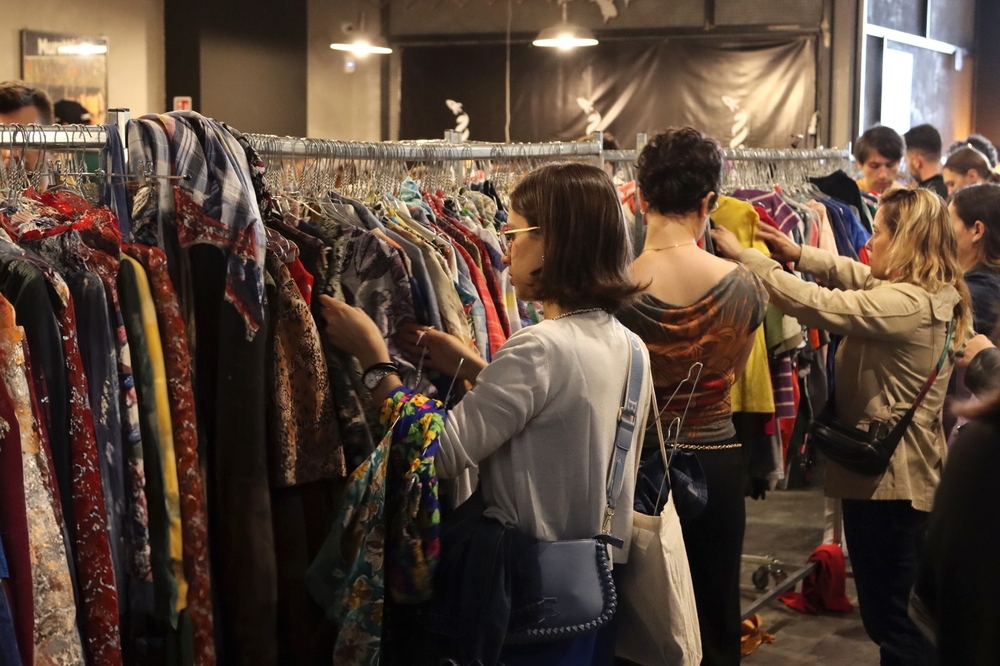
The pace at which the trade in second-hand clothing and accessories is growing is among the fastest in the entire fashion industry. While the overall clothing market is growing at a single-digit rate, this segment is expanding at roughly twice that pace. According to a survey by ThredUp, the value of the second-hand market could reach USD 289 billion this year, up from USD 141 billion five years ago. Moreover, it is expected that over the next five years it could approach the USD 400 billion mark. Rising living costs, inflation, and changes in shopping habits are contributing to this growth. A significant role in how second-hand goods are perceived is played by the digital environment, which offers a vast selection of products in one place, allowing customers to browse from the comfort of their homes. As a result, the segment is estimated to account for approximately 10% of the global clothing market.
From Flea Market to Billion-Dollar Business
Investors are beginning to view the market as a long-term shift in consumer behaviour, and it can essentially be said that it is a profitable business. One example is the well-known platform Vinted. The value of goods sold on the platform increased by 50% in 2025, and according to the company’s report, users saved more than EUR 21 billion, representing a 72% saving compared to the original price. The positive situation in which the Lithuanian company found itself resulted in opportunities for further expansion, and its platform is currently available in 26 European countries, with the United Kingdom and France among its largest markets. Vinted has also been used by American consumers for more than 10 years, although it is not yet as widespread there, something the company wants to change as soon as possible. New developments include the expansion of categories to furniture, toys, and more, alongside VintedGo and VintedPay, which encompass its own logistics and payment infrastructure. Vinted has also announced further expansion plans, including the acquisition of the Depop marketplace from Etsy for more than USD 1 billion.
Revenues Confirming the Strength of Growth
The company’s financial results also demonstrate its success. Last year, users traded goods worth EUR 10.8 billion in gross merchandise value on the platform, generating revenues exceeding EUR 1 billion. Both economic indicators represented year-on-year increases of 47% and 38%, respectively. Net profit reached EUR 62 million, representing a 19% decline compared to the previous year, but this was due to the company’s overall expansion. Although it is still far from the results of giants such as eBay, the company’s rapid growth has increasingly sparked discussions about a future stock market listing. During a secondary share transaction, the results of which Vinted reported on its website at the end of April, shares worth EUR 880 million were traded, increasing its equity value to EUR 8 billion, with new investors such as BlackRock also participating.
New Rules for Luxury Brands
The biggest change of recent years has been the penetration of second-hand goods into the luxury world. While the sale of used premium products was once associated mainly with auction houses and collectors, it has now become accessible to a much broader public. Rising prices of new products have created opportunities for customers who want to own a prestigious brand while also seeking a better price. For many, second-hand shopping is the gateway to the world of luxury. On the one hand, second-hand goods demonstrate the timeless value of a given luxury item even after many years, but demand is not directed toward the brands’ official boutiques. Some companies are therefore experimenting with certified resale programs or offering refurbishment services for older models.
Generation Z Is Changing the Rules of the Game
Gen Z and millennials are considered the driving force behind the second-hand market. According to GlobalData, they are expected to account for as much as 70% of future growth. For example, last year alone, 58% of people were willing to purchase second-hand goods, representing a year-on-year increase of 6 percentage points. For these customer groups, second-hand shopping is not a compromise, and younger consumers include additional factors in their decision-making. They are looking for unique pieces, limited collections, or products that are no longer sold in regular stores. Social media also has a major influence, where vintage fashion has become a natural part of content, and thanks to the digital era, online shopping has become second nature for younger generations. The economic aspect is also important. While recent decades have been characterized by the growth of fast fashion, consumers today pay greater attention to recycling and are increasingly concerned about the environmental impact of production.
AI Opens a New Dimension for Second-Hand Shopping
The next chapter of development is being written by artificial intelligence. The online second-hand world offers an enormous number of products, and unlike traditional stores, most items are available only as single pieces, making “browsing through” them challenging. Modern algorithms, however, can solve this problem easily. Artificial intelligence is trained to analyze photos, recognize brands, categorize products, and subsequently provide better recommendations, thereby increasing the likelihood that customers will find exactly what they are looking for. Of course, it also serves sellers, who can better evaluate and deploy advertisements. It can therefore be said that AI is creating a more efficient market with a better consumer experience. In an environment where millions of new listings are constantly being added, the ability to work with data becomes an advantage.



.svg)
.svg)