

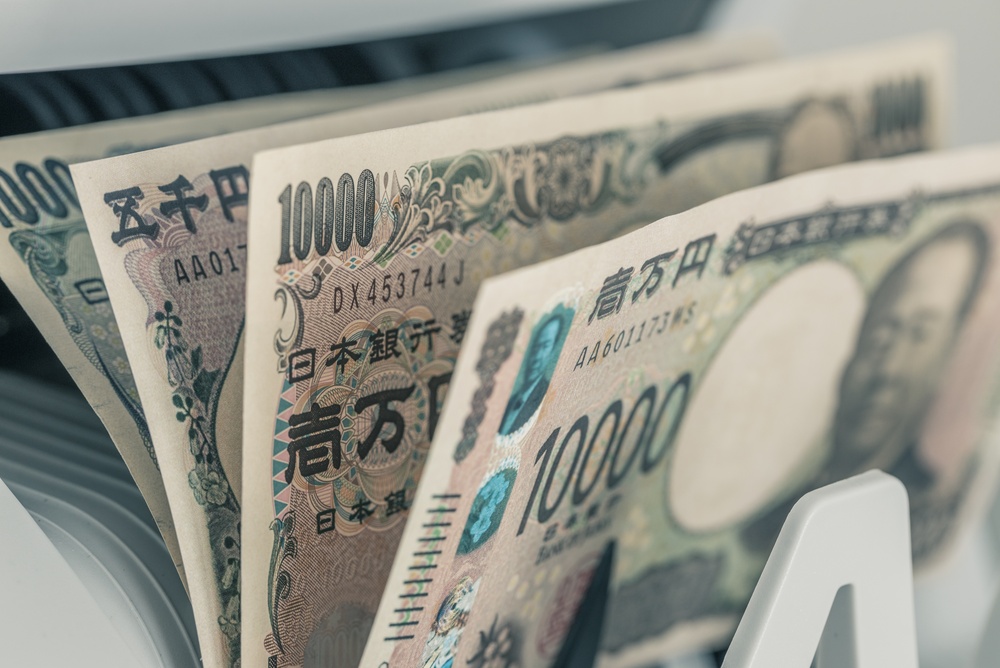
During Asian trading in the final days of June, the Japanese currency fell to more than 162 JPY per U.S. dollar, representing its weakest exchange rate since 1986. Historically, however, charts show that over the past five years, periods of yen appreciation have been followed by corrections, although whether this pattern will repeat remains uncertain. Meanwhile, the U.S. dollar remained close to 13-month highs against a basket of major global currencies. The U.S. Dollar Index rose by more than 2% during June, marking its strongest monthly performance since the middle of last year, as investors continue to move capital into higher-yielding U.S. assets. The index reached a five-year high at the end of 2022. As of July 1, 2026, the exchange rate stood at 162.71 JPY per dollar, while the Dollar Index hovered above 101 points.* Continued growth in U.S. technology companies, supported by advancements in artificial intelligence, also played a role, although the most significant factor remained the interest rate differential between the United States and Japan.
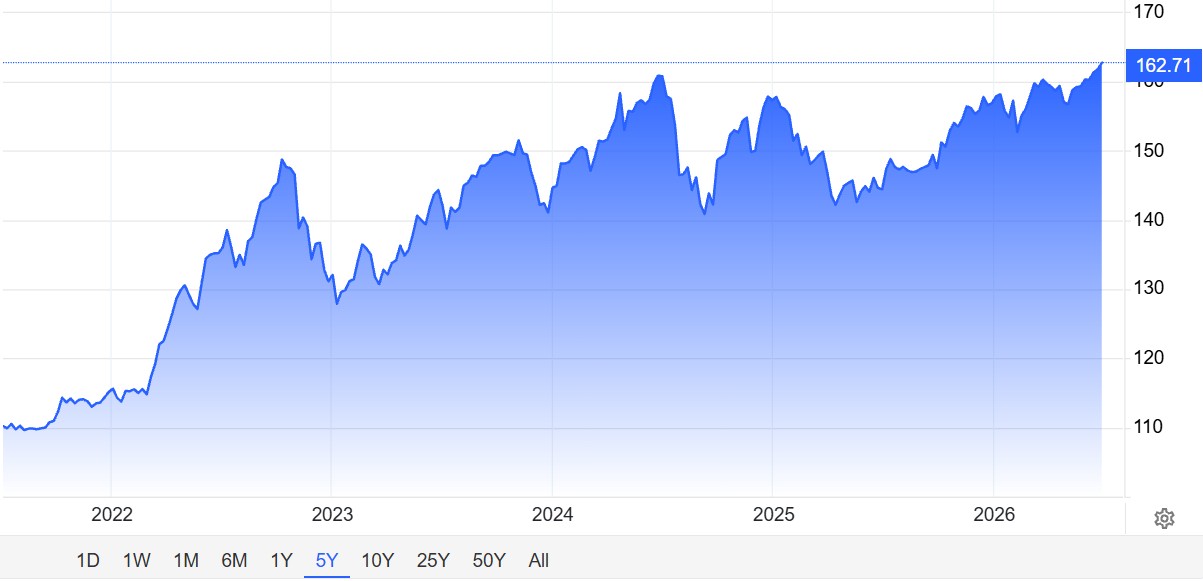
Price development of USD/JPY over the last 5 years. Source: Trading Economics*
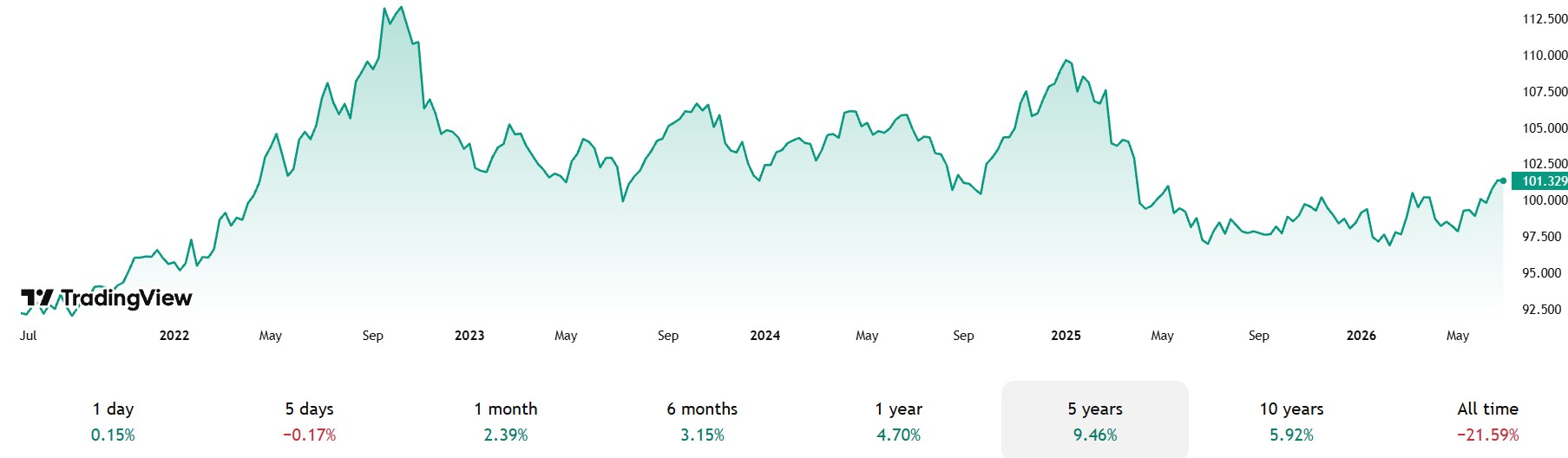
Price development of the U.S. Dollar Index over the last 5 years. Source: TradingView*
Interest Rate Differentials Were Key
Although the Bank of Japan (BoJ) raised its benchmark interest rate again in June to 1%, marking the highest level in approximately 30 years, the move has so far had only a limited impact on global markets. The central bank had already increased rates in December to 0.75%. The bank committed to this normalization approach in 2024, but traders remain more focused on the policy divergence between the two countries. Interest rates in the United States remain significantly higher, and markets expect further increases and continued monetary tightening. The CME FedWatch Tool indicated that markets expected the first rate hike as early as the September meeting, with further increases likely through the end of the year (data as of July 1, 2026). Inflation remains above the Federal Reserve’s 2% target, and recent data showed renewed acceleration in price pressures. This yield differential continues to encourage investors to borrow cheaply in Japanese yen and invest in higher-yielding assets abroad. These so-called “carry trades” have been among the primary drivers of yen weakness for several years.
Talk of Intervention Returns
As the yen continues to weaken, the question of whether the Japanese government will intervene is once again gaining attention. Minister Satsuki Katayama stated that the government is prepared to respond to excessive movements in the foreign exchange market and take necessary action if required. Chief Cabinet Secretary Minoru Kihara struck a similar tone, emphasizing the government's goal of building an economy more resilient to sharp currency fluctuations. Markets still vividly remember the period between April and May, when Japan spent more than 11.7 trillion JPY from its foreign exchange reserves to support the currency. At the end of April, the dollar-yen exchange rate suddenly dropped, fueling speculation of government intervention, although the move was later reversed.* Should the yen continue to weaken, another intervention remains possible. According to analysts, however, any impact would likely be temporary.
A Weak Yen Helps Maily to Export
The weakening yen has mixed effects on the economy. On one hand, it benefits export-oriented companies, which sell goods abroad and receive higher revenues when foreign earnings are converted back into yen. On the other hand, it increases the cost of imported raw materials, energy, and other commodities on which Japan heavily depends, especially in light of developments in the Middle East. As a result, yields on Japanese government bonds have risen significantly in recent days. The yield on the 40-year government bond climbed above 3.7%, while the 30-year bond yield reached 3.9% (as of July 1, 2026).* Markets are also closely monitoring upcoming U.S. employment data, as weaker economic figures could partially ease expectations for further tightening. For now, however, the prevailing view is that the U.S. economy remains resilient, and investors continue to favor dollar-denominated assets despite the higher risks involved.
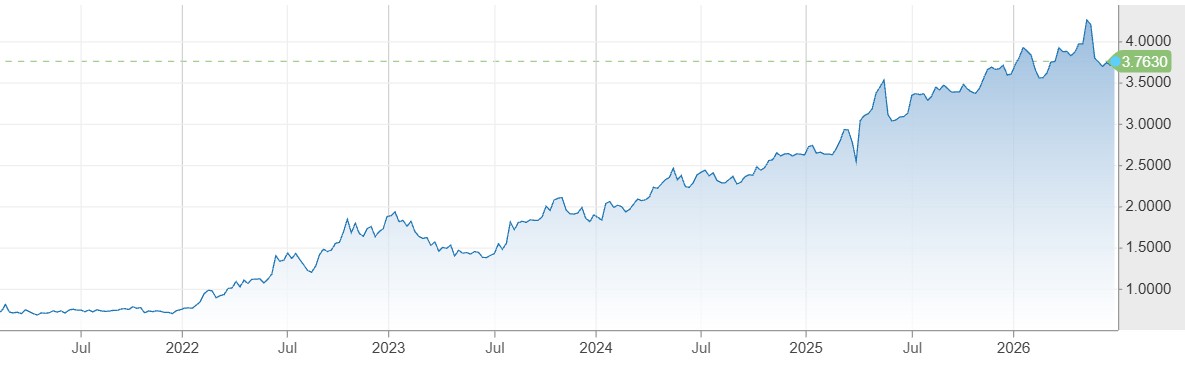
Performance of 40-year Japanese government bonds over the last 5 years. Source: CNBC*
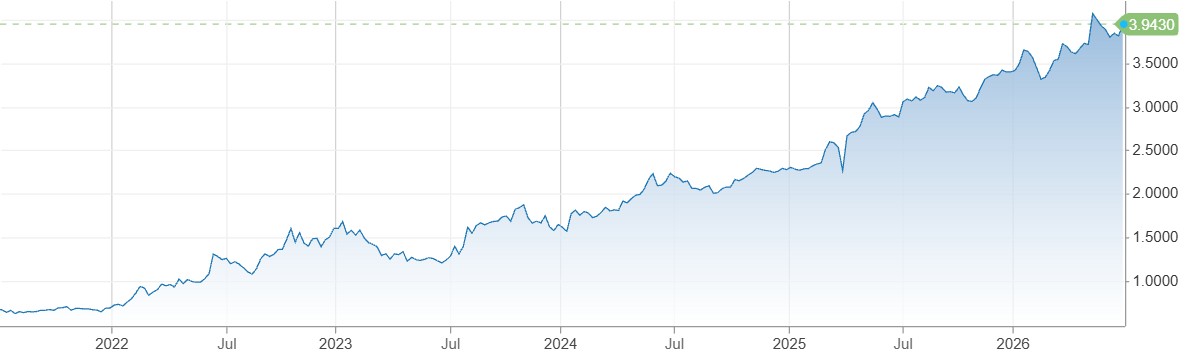
Performance of 30-year Japanese government bonds over the last 5 years. Source: CNBC*
* Past performance is not a guarantee of future results.
This text constitutes a marketing communication. It does not represent investment advice, investment research, or an offer to enter into any transaction involving a financial instrument. The content does not take into account the individual circumstances, experience, or financial situation of readers. Past performance is not a guarantee or prediction of future results.



.svg)
.svg)